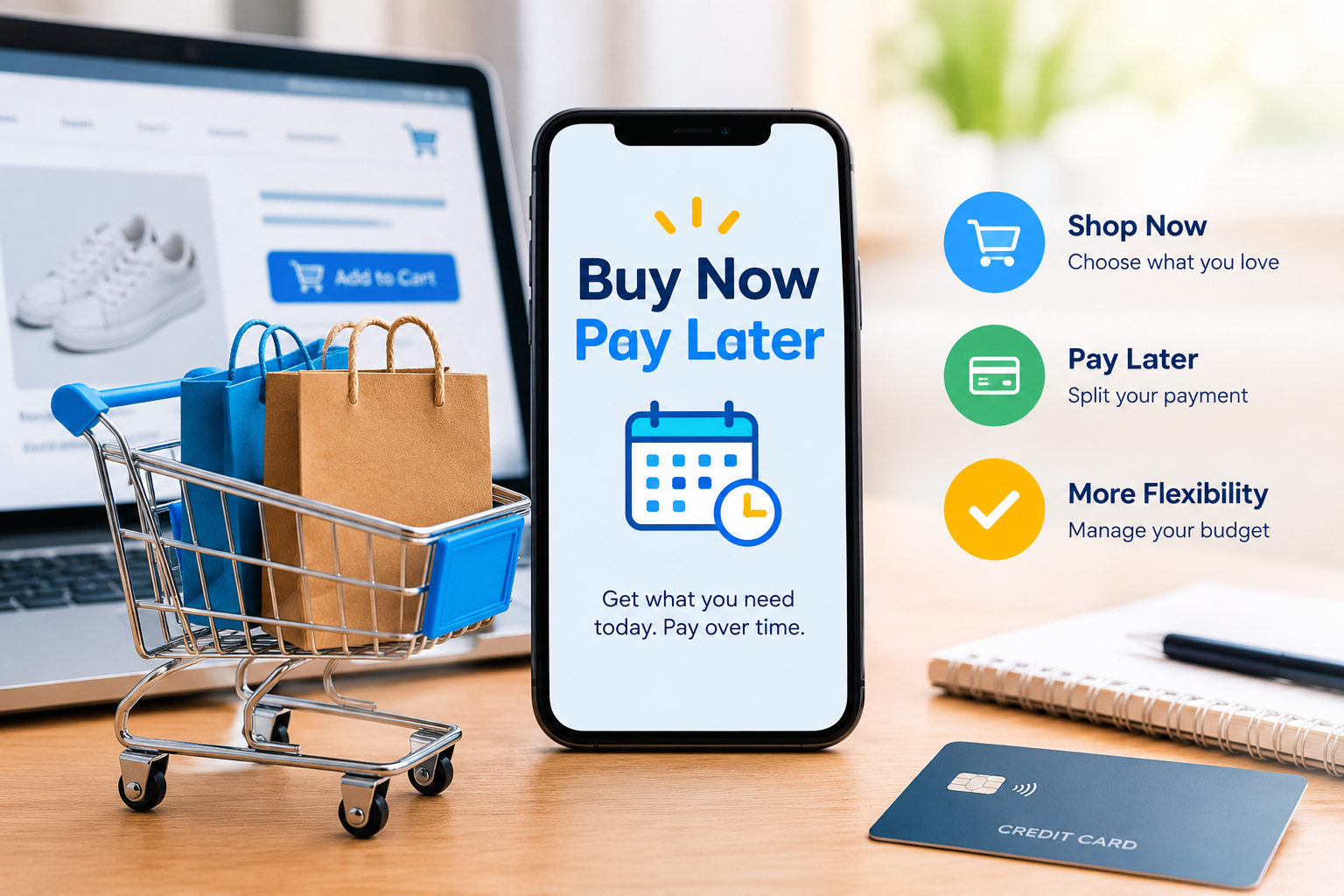
"Pay in 3 interest-free instalments." The button sits right next to the price, and it makes a RM600 purchase feel like RM200. Buy now pay later (BNPL) is now offered by many online shops, apps and stores. Used carefully, it can spread a planned cost. Used casually, it makes overspending easy and can pile up fees and debt.
This guide explains how BNPL works, what it really costs, and the questions to ask before you click "Pay later".
Our examples use ringgit (RM). BNPL rules and fees differ by country and provider, so always read the terms of the service you're using.
- BNPL is a loan, even when it's interest-free.
- Many plans charge no interest but do charge fees, especially for late payments.
- It's easy to overspend and easy to lose track when you use several plans at once.
- BNPL use and missed payments may appear on your credit record, depending on your country and provider.
- A simple rule: only use BNPL for something you could afford to pay for today.
How buy now pay later works
The US Consumer Financial Protection Bureau (CFPB) describes BNPL as a type of loan that lets you buy something with little or no upfront payment and pay it back in instalments. A common format splits the price into four payments, with the first due at checkout. Some plans for bigger purchases stretch over months or years.
Australia's Moneysmart notes that BNPL services usually don't charge interest on the purchase. Instead, they make money from fees, and from the shops that offer them.
| Typical feature | What to check |
|---|---|
| Instalments (for example 3 or 4) | How many, how often, and when the first is due |
| "0% interest" | Whether that applies to every plan, or only the short ones |
| Late fees | How much per missed payment, and whether they can stack up |
| Account or processing fees | Monthly fees, or a fee per payment method |
| Automatic deductions | Which card or account is charged, and what happens if it fails |
The real cost: a worked example
Here's an illustration, not a real provider. You buy headphones for RM600 on a plan of three monthly payments of RM200, with no interest and a RM10 late fee for each missed payment.
- Everything on time: you pay RM600. BNPL cost you nothing extra.
- One late payment: you pay RM610. A small cost, but it's 1.7% on top of the price.
- Two late payments: you pay RM620, and the missed payments may be recorded against you.
Now imagine four plans like this running at once: RM800 a month in instalments, on different dates, from different apps. That's when BNPL stops being convenient and starts squeezing your rent and food money.
The hidden risks
Moneysmart lists several things to keep in mind before signing up:
- It's easier to overspend. Splitting the price makes it feel smaller, so you may commit to more than you can afford.
- Fees can add up, even when the plan is advertised as interest-free.
- Multiple services are hard to manage. Several plans on different dates make it easy to miss one.
- It might affect a future loan application. BNPL arrangements, late fees and applications may appear on your credit report, and lenders may consider them.
The CFPB also notes that, unlike a credit card, your ability to pay may be checked again with each new BNPL purchase, and advises reviewing the loan documents for fees before agreeing, and making sure you can afford the payments.
If you're using BNPL to pay for groceries, bills or other everyday essentials, treat it as a warning sign that your budget needs attention, not as a solution. Our guide to cutting monthly expenses is a good place to start.
5 questions to ask before you click "Pay later"
- Could I pay the full price today? If not, you probably can't afford it yet.
- Was this purchase planned? If BNPL is what made you decide to buy, pause. See how to stop impulse buying.
- Do I know every fee? Read the late fee and any account fees before agreeing.
- How many plans do I already have? Add up all the instalments due next month.
- Is the payment account reliable? A failed automatic payment can trigger a late fee.
When BNPL can make sense
Reasonable uses
- A planned, necessary purchase you've budgeted for
- When you have the money but want to keep cash flow smooth
- Short, genuinely interest-free plans you'll pay on time
- One plan at a time, tracked in your budget
Risky uses
- Impulse buys, especially during big sales
- Everyday essentials like food and bills
- Several plans running at the same time
- When you're already behind on other debts
Moneysmart also points out that lay-by, where you pay before you collect the item, can be cheaper because it has no account-keeping or late fees.
How to use BNPL safely
- Add each instalment to your budget as a bill, the day you sign up.
- Set calendar reminders a few days before each payment.
- Stick to one provider so everything is in one place.
- Turn off "pay later" as the default payment method in shopping apps.
- Delete saved cards from apps you don't use often.
BNPL vs credit card
| BNPL | Credit card | |
|---|---|---|
| Interest | Often none on short plans | None if you pay in full by the due date; high if you don't |
| Main cost if you slip | Late fees | Interest plus late fees |
| Spending limit | Per provider, can change with each purchase | One limit for the card |
| Biggest risk | Many small plans adding up | Carrying a balance for months |
Neither is "free money". See how credit card interest works for the card side.
Frequently asked questions
Does BNPL affect my credit score?
It depends on your country and provider. In some places, BNPL accounts and missed payments are reported to credit bureaus. Assume a missed payment can be recorded against you.
What if I can't make a payment?
Contact the provider before the due date. Some offer hardship options. If you're struggling with several debts, a free debt-advice service can help. In Malaysia, that's AKPK.
Can I pay off a BNPL plan early?
Many providers let you, often without a fee. Check your plan's terms.
The bottom line
Buy now pay later is a loan with a friendly button. It can help with a planned purchase you could already afford, paid on time. It becomes expensive when it encourages impulse buys, runs in several apps at once, or covers everyday essentials. Before you click "Pay later", ask whether you'd still buy it if you had to pay the full price today.
How we wrote this: this guide draws on the US Consumer Financial Protection Bureau and Moneysmart (Australian Government), listed below. The example is an illustration, not a real provider. This is general information, not personal financial advice.